Choosing the Right Material for Your Fabricated Part: Steel vs. Aluminum vs. Stainless
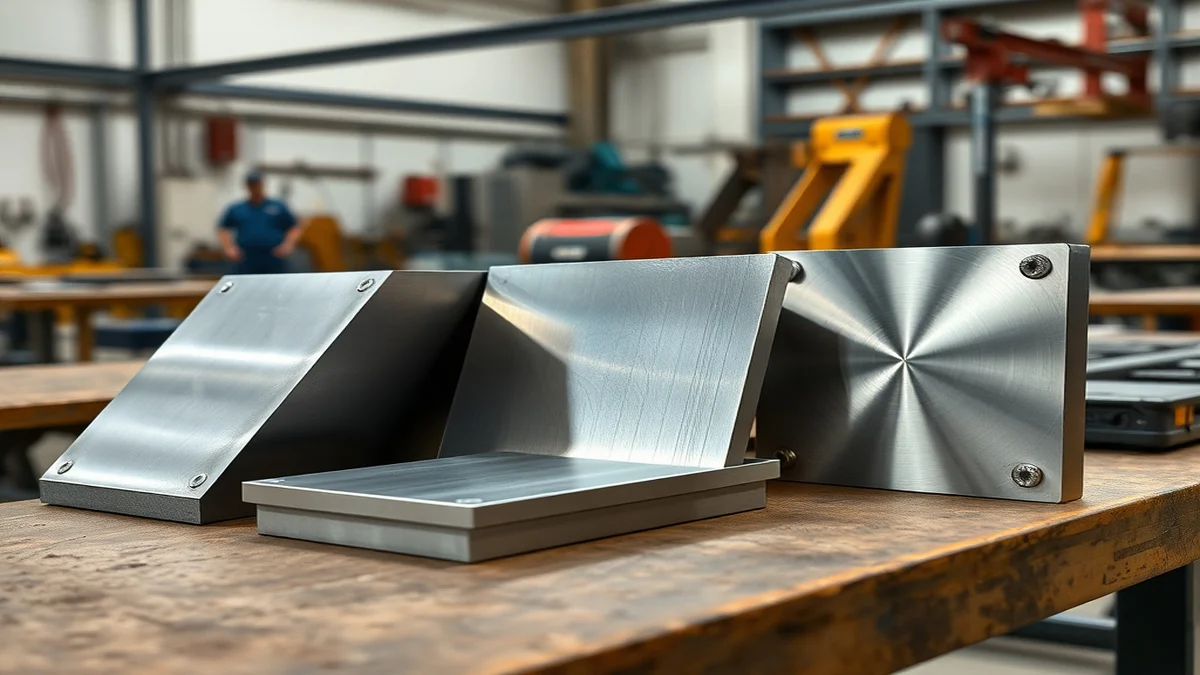
Most custom fabricated parts end up made from one of three materials: carbon steel, aluminum, or stainless steel. Each covers a genuinely different set of tradeoffs — strength versus weight, cost versus corrosion resistance, ease of fabrication versus long-term durability — and picking the wrong one for the application is one of the more expensive mistakes to correct after a part is already in production.
This isn't a ranking of which material is best. It's a practical walkthrough of what actually differs between the three, so you can weigh the tradeoffs against your specific part rather than defaulting to whatever's cheapest or whatever a previous part happened to use.
Carbon Steel: The Default Structural Choice
Carbon steel is generally the most cost-efficient structural material for fabricated parts, with strong mechanical properties across a wide range of grades and thicknesses. It cuts, forms, and welds predictably, which keeps fabrication cost lower relative to stainless for the same geometry, and it's the material most brackets, frames, and structural weldments default to unless there's a specific reason to choose otherwise.
The tradeoff is corrosion resistance. Bare carbon steel rusts when exposed to moisture, so parts that will see outdoor exposure, washdown environments, or high humidity typically need a protective finish — powder coating being the most common — to hold up over time. That finish is an added production step and cost, but it's usually still more economical than switching the base material to stainless for corrosion resistance alone.
Aluminum: When Weight Actually Matters
Aluminum's defining advantage is weight — significantly lighter than steel for a comparable structural application, which matters directly for parts that get shipped, mounted on moving equipment, or handled manually in the field. It also machines fast and holds tight tolerances comparatively easily, and it forms a natural oxide layer that gives it reasonable corrosion resistance without a coating, though anodizing is common when a harder or more consistent finish is needed.
The tradeoff is strength-to-thickness relative to steel — an aluminum part designed to match a steel part's load capacity often needs more material thickness or a different structural design, not a direct 1:1 material swap. Aluminum also generally costs more per pound than carbon steel, though the weight savings can offset that on parts where shipping or handling weight is a real cost factor.
Stainless Steel: Corrosion Resistance and Cleanability
Stainless steel's alloy composition gives it strong corrosion resistance without a separate coating, along with a clean, consistent appearance that holds up over time — which is why it shows up in food-adjacent, medical-adjacent, marine, and other applications where corrosion resistance or cleanability is a genuine requirement rather than a nice-to-have.
That performance comes at a cost premium over carbon steel in both raw material and fabrication — stainless is more demanding to machine cleanly (it can work-harden under the cutting tool if not handled correctly) and generally costs more to weld and finish. For applications where the corrosion resistance is genuinely needed, that premium is usually worth it; for applications where a coated carbon steel part would perform just as well, stainless is often more material than the job requires.
A Practical Way to Decide
- Start with the operating environment: indoor and dry favors coated carbon steel; outdoor, washdown, or corrosive favors stainless or a well-finished coated material
- Weigh weight sensitivity: if the part gets shipped, mounted on moving equipment, or handled manually, aluminum's weight advantage may outweigh its cost premium
- Consider fabrication cost alongside material cost — stainless costs more to machine and weld, not just to buy
- Check whether corrosion resistance is a genuine requirement or an assumption carried over from a previous part's spec
- When in doubt, ask — a shop that fabricates all three materials regularly can walk through the real tradeoffs for your specific application rather than defaulting to habit
There's rarely a single "correct" material in the abstract — the right choice depends on your part's environment, load requirements, weight sensitivity, and budget, weighed together rather than any one factor in isolation.
Material Choice Affects More Than the Part Itself
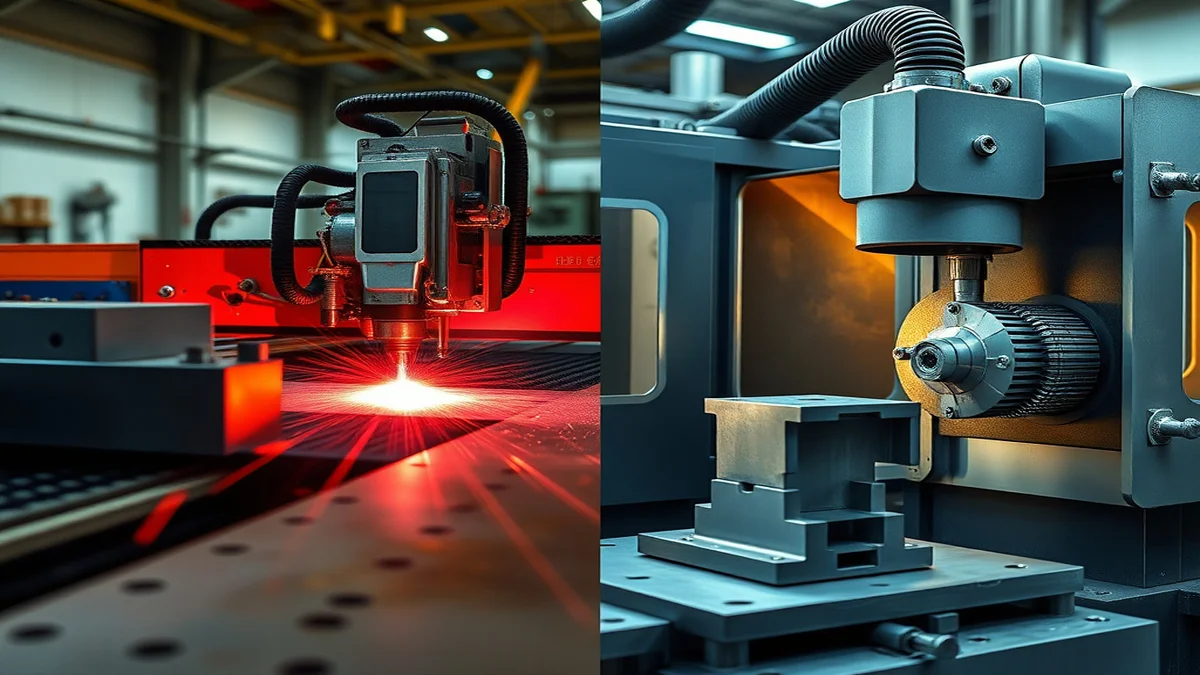
Material selection also shapes which fabrication processes make sense and how they're priced. Stainless generally costs more to laser cut, form, and weld than the equivalent carbon steel part, independent of raw material price. Aluminum machines faster than steel but has its own welding considerations (typically requiring TIG rather than standard MIG in many applications). Getting the material decision right early keeps the rest of the production sequence — cutting, forming, welding, finishing — quoted accurately from the start, instead of requoting after a mid-project material change.
Frequently Asked Questions
Not necessarily. A well-finished, powder-coated carbon steel part can perform well in many outdoor applications at a lower total cost than stainless. Stainless makes the most sense when corrosion resistance is a hard requirement — marine, washdown, or highly corrosive environments — rather than a general precaution.
Aluminum is significantly lighter than steel by volume, though the exact weight savings on a specific part depends on whether the aluminum version needs added thickness to match steel's strength for that application. We can help estimate the real weight difference for your specific geometry during quoting.
Welding dissimilar metals directly together (steel to aluminum, for example) is generally not straightforward and often isn't recommended without a specific transition method. Mixed-material assemblies are more commonly joined with fasteners rather than welded directly — tell us your intended assembly and we'll advise on the right approach.
Have a part you're trying to source?
Send your drawing, material, and quantity and we'll confirm the right process before anything is quoted.