Welding & Weldment Assembly
Joining individually cut and formed components into a single structural weldment — frames, enclosures, brackets-to-base assemblies — using MIG or TIG welding fixtured for repeatable fit-up.
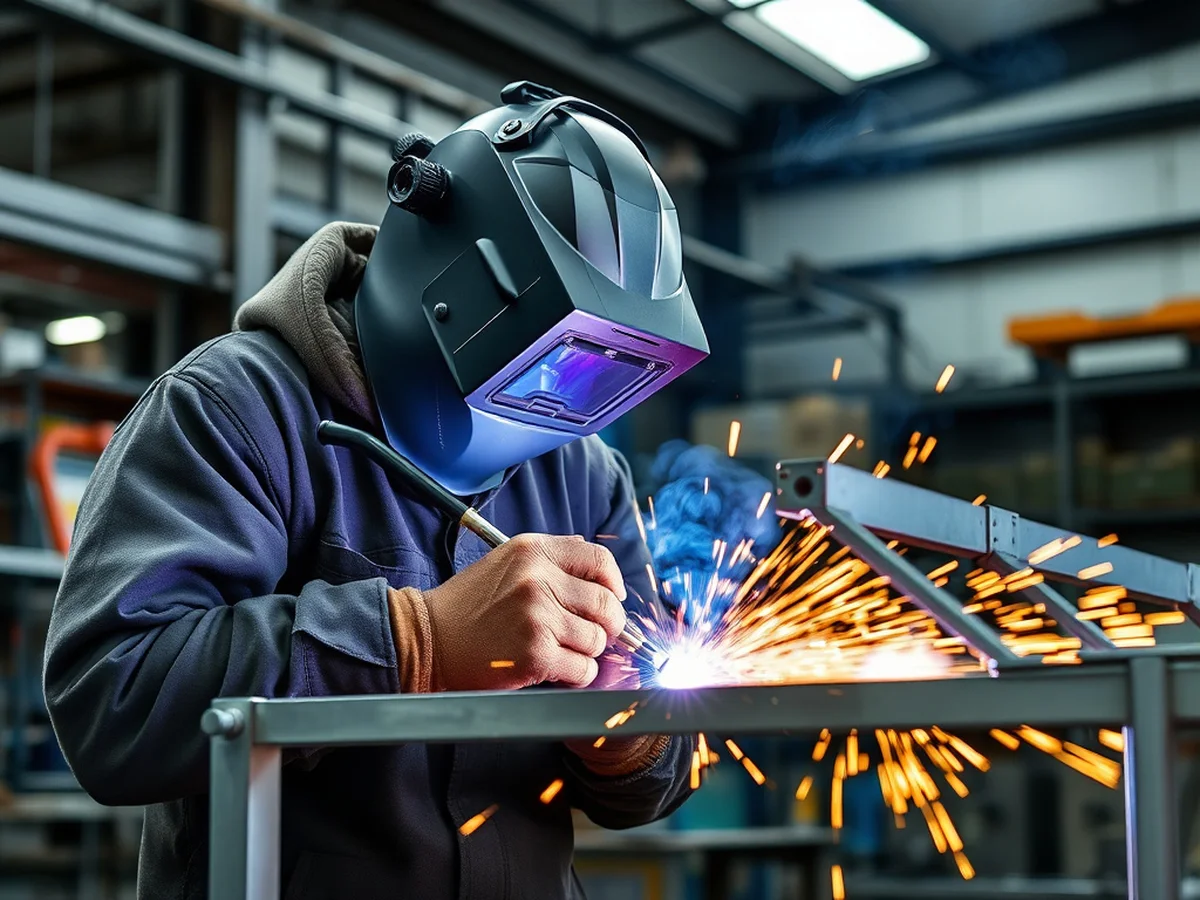
Welding and weldment assembly is where individually cut and formed parts come together into a single structural unit — a frame, a fully enclosed housing, a bracket welded to a base plate. It's often the final structural step before finishing, and it's where a fabricated part actually becomes the load-bearing or fully enclosed assembly it was designed to be.
MIG (metal inert gas) and TIG (tungsten inert gas) are the two most common processes for custom weldment work, each suited to different material, thickness, and cosmetic-finish combinations. MIG is generally faster and well suited to structural steel weldments; TIG offers more control and a cleaner weld appearance, and is commonly used on thinner material, aluminum, and stainless where weld appearance or heat control matters more.
This page covers how weldments are fixtured for repeatable fit-up across a production run, what affects weld quality and appearance, and what to include in your RFQ — a weldment drawing showing which joints are welded, weld type, and any critical flatness or squareness requirements after welding.
What You Get
- MIG and TIG welding available, matched to your material, thickness, and cosmetic finish requirements
- Weldments fixtured for repeatable fit-up across a production run, not eyeballed part to part
- Handles structural frames, fully enclosed housings, and bracket-to-base assemblies
- Post-weld cleanup and dimensional check against critical flatness or squareness callouts
- Sequenced directly with upstream cutting and forming so heat distortion is planned for, not discovered after
Ideal For
- Structural frames and bases that carry load and need consistent, repeatable joint strength
- Fully enclosed housings or boxes formed from separate panels welded at the seams
- Multi-piece brackets or assemblies where individual formed parts are welded into one unit
- Production runs where weld fixturing is needed to keep dimensions consistent part to part
MIG vs. TIG — Matching the Process to the Part
MIG welding feeds a continuous consumable wire electrode through the torch, generally welds faster than TIG, and is a strong default for structural carbon steel weldments where weld speed matters more than a highly refined cosmetic bead appearance. It handles a range of material thicknesses well and is the more common choice for frames, bases, and structural assemblies.
TIG welding uses a non-consumable tungsten electrode with a separate filler rod, gives the welder more precise control over heat input, and produces a cleaner, more controlled weld bead — which is why it's the more common choice for thinner material, aluminum, stainless, and any weldment where cosmetic weld appearance is part of the spec, not just structural integrity.
Many weldments actually use both processes on the same assembly — MIG for the primary structural joints, TIG for thinner or more visible sections — and we'll recommend the right split based on your drawing and finish requirements rather than defaulting to one process across the whole part.
- MIG: faster, strong default for structural carbon steel frames and bases
- TIG: more heat control, cleaner bead, common on aluminum, stainless, and cosmetic-visible welds
- Many weldments combine both processes across different joints on the same assembly
- Process selection is based on your material, thickness, and finish requirements, not a default
Fixturing for Repeatable Fit-Up
A one-off prototype weldment can be tack-welded and checked by hand, but a production run needs fixturing — a jig that holds every individual component in the correct position before and during welding — so that part five hundred fits together the same way part one did. Without fixturing, small variations in individual cut and formed parts compound into inconsistent final assembly dimensions across a run.
Fixture design happens before production welding starts, based on the weldment drawing's critical dimensions — which faces need to stay flat, which features need to stay square to each other, and which dimensions actually matter for the assembly to function versus dimensions that have some natural tolerance.
For weldments with tight flatness or squareness requirements after welding, we also account for heat distortion in the fixture and weld sequence — welding introduces localized heat that can pull a part out of flat or square if the joint order isn't planned, which is a fixturing and sequencing problem to solve up front, not a rework problem to fix after.
- Production weldments are fixtured to hold repeatable fit-up across the full run
- Fixture design is based on the drawing's critical dimensions, identified before welding starts
- Weld sequence is planned to manage heat distortion on flatness- or squareness-critical weldments
- A one-off prototype weldment can skip full fixturing; a production run generally shouldn't
What to Include in a Weldment RFQ
A weldment RFQ works best with a drawing that clearly identifies every welded joint, the weld type or size where it matters structurally, and which faces or dimensions are critical after welding (flatness, squareness, or a specific final dimension). If individual components are separately cut or formed parts that get welded together, include those individual drawings alongside the assembly drawing.
Weld inspection and documentation requirements — visual inspection, a specific weld procedure specification (WPS), or a certified welder requirement — should be called out up front if your application requires them, since they affect both process and cost and are much easier to plan for than to add after the fact.
As with every fabricated part, quantity changes the approach: a single prototype weldment is welded and checked individually, while a production run is fixtured and welded to a repeatable sequence — tell us which situation applies so the quote reflects the right approach.
- Assembly drawing showing every welded joint, weld type where structurally critical, and post-weld critical dimensions
- Individual component drawings for parts that get welded together, alongside the assembly drawing
- Any weld inspection, WPS, or certified-welder requirements called out up front
- Prototype vs. production quantity, since fixturing approach differs between the two
What Affects the Price
Every RFQ is reviewed against your drawing before it's quoted. These are the factors that move the number most.
Joint count and weld length
More individual welded joints and longer total weld length both add labor time to a weldment.
Process (MIG vs. TIG) and material
TIG welding on thinner material or aluminum/stainless generally takes longer per joint than MIG on structural carbon steel.
Fixturing requirements
Production-run weldments requiring dedicated fixturing carry a setup cost that's amortized across the run quantity.
Inspection and documentation
A specified weld procedure, inspection requirement, or certification adds process and documentation time, factored into the quote.
Common Questions
It depends on material, thickness, and whether weld appearance is part of the spec. MIG is generally faster and a strong default for structural carbon steel; TIG offers more heat control and a cleaner bead, common on aluminum, stainless, and cosmetically visible welds. We'll recommend the right process — or combination — based on your drawing.
All three — carbon steel, stainless, and aluminum weldments are common fabricated-part work. Aluminum and stainless typically call for TIG more often than carbon steel does, due to heat sensitivity and cosmetic finish considerations, which we'll account for in the process and quote.
Through fixturing — a jig that holds every individual component in the correct position before and during welding, so each part in the run fits together the same way. Fixture design is based on the weldment drawing's critical dimensions, planned before production welding starts, not adjusted part by part.
Yes, welding introduces localized heat that can pull a part out of flat or square if the weld sequence isn't planned for it — this is a known factor we account for in fixturing and joint order on any weldment with tight post-weld flatness or squareness requirements, rather than something addressed as rework after the fact.
A single prototype weldment is absolutely doable and is typically tack-welded and checked by hand rather than fully fixtured, since fixture tooling cost is harder to justify for a quantity of one. Tell us your quantity up front and we'll quote the approach — fixtured or hand-fit — that matches it.
Explore Related Capabilities
Need welding & assembly?
Send your drawing, material, and quantity, and we'll confirm the right process before anything is quoted.