Laser Cutting
Precision-cut flat and profiled metal parts from a focused laser beam — the starting point for most sheet-based brackets, panels, gussets, and enclosure blanks before forming or welding.
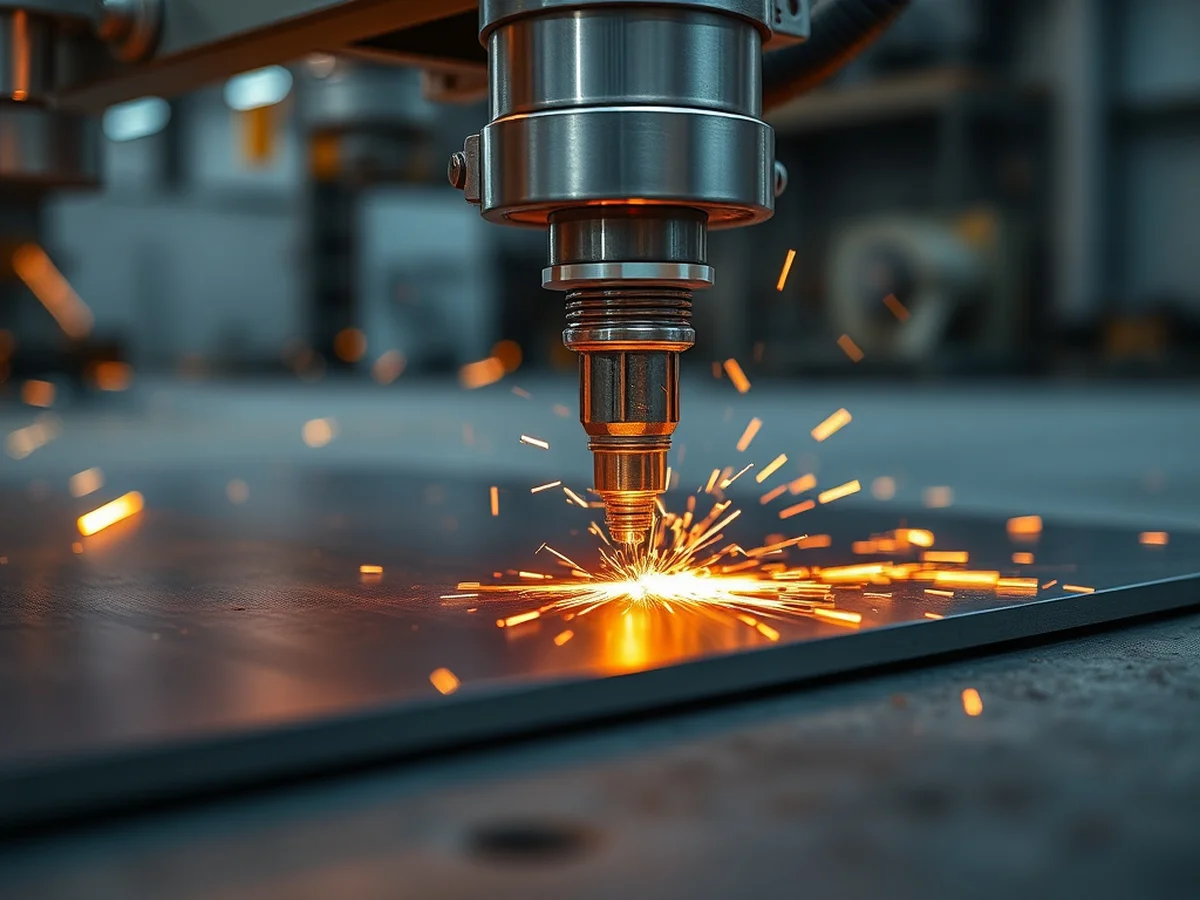
Laser cutting uses a focused, high-power beam to trace a programmed path through flat stock, producing a clean-edged part directly from a 2D drawing or DXF/DWG file with minimal tooling and no hard dies. It's the process most custom brackets, gussets, panels, and enclosure blanks start as, whether the finished part stays flat or goes on to bending and welding.
Because the cutting path is programmed rather than tooled, laser cutting is well suited to both a one-off prototype and a production run of the same part, without the upfront die cost that stamping requires. That flexibility is a big part of why it's the default first step for custom metal parts buyers who don't yet have production volume locked in.
This page covers what laser cutting is good at, where it hits its limits (thick plate, extremely tight positional tolerances, or parts that need a true machined finish), and what we need from you — material, thickness, DXF or drawing, and quantity — to turn around an accurate quote.
What You Get
- Clean, repeatable edge quality on flat and profiled parts without hard tooling
- Works directly from a DXF, DWG, or dimensioned drawing — no die investment for prototype or short-run quantities
- Handles complex profiles, nested hole patterns, and tight external contours in a single pass
- Scales from a single prototype part to a production nesting run on the same file
- Compatible with downstream bending, welding, and finishing without re-fixturing the part
Ideal For
- Flat brackets, gussets, mounting plates, and panel blanks cut to a dimensioned profile
- Enclosure and panel flats that will be formed or welded in a later step
- Prototype and low-to-mid volume runs where die tooling cost isn't justified
- Parts with complex internal cutouts, slots, or hole patterns that would be slow to machine individually
What Laser Cutting Does Well — and Where It Reaches Its Limit
Laser cutting excels at flat, two-dimensional geometry: external profiles, internal cutouts, hole patterns, and slots, all cut to the accuracy of the programmed path. On sheet and thinner plate stock, edge quality is consistently clean with a narrow heat-affected zone, which is why it's the default choice for brackets, panels, and blanks that don't need a fully machined surface.
The practical limit shows up as material gets thicker. Heavier plate cuts more slowly, the cut kerf widens, and edge squareness can drift slightly compared to thin sheet — factors we account for when quoting thicker material rather than assuming thin-sheet tolerances carry straight through.
Laser cutting also doesn't produce a true machined surface or a tapped hole on its own. If a part needs a precision bore, a threaded hole, or a tightly toleranced mating feature, that typically means a laser-cut blank that goes on to CNC machining for those specific features, rather than trying to hold machining-level tolerances from the cutting process alone.
- Best fit: flat profiles, cutouts, and hole patterns in sheet and mid-range plate thickness
- Edge quality and cut speed both shift as material gets thicker — expect that in the quote, not as a surprise
- Threaded holes and precision bores are typically a downstream CNC step, not part of the cutting process itself
- A laser-cut blank is frequently the first operation in a part that's later formed, welded, or machined
Materials and Thickness Range
Carbon steel, stainless steel, and aluminum are all commonly laser-cut, each with its own typical thickness range where cut quality and cost stay predictable — thin-gauge sheet cuts fast and clean across all three; heavier plate is achievable but slower, with cost and lead time scaling accordingly.
Material selection affects more than just cuttability. Stainless and aluminum both bring different downstream considerations — stainless for corrosion resistance and food/medical-adjacent applications, aluminum for weight-sensitive parts — that are worth deciding early, since they can affect whether a part is cut, formed, or welded differently later in the process.
If you're not sure which material fits your application, our team will walk through the tradeoffs with you before quoting rather than defaulting to a guess — see our materials guide for a fuller comparison of steel, aluminum, and stainless for fabricated parts.
- Carbon steel: the most common structural choice, wide thickness range, cost-efficient for most bracket and panel work
- Stainless steel: corrosion resistance and cleanability, common in food-adjacent, medical-adjacent, and outdoor applications
- Aluminum: lighter weight for the same footprint, common where the finished assembly's total weight matters
- Unusual alloys or non-stock thicknesses may extend lead time due to mill sourcing — flagged during quoting, not after
What to Include in a Laser Cutting RFQ
A complete RFQ turns around fast; an incomplete one adds days of back-and-forth before it even enters the queue. For laser-cut parts specifically, the fastest path to an accurate quote includes a DXF or DWG file (or a fully dimensioned PDF drawing if a CAD file isn't available), material and thickness, quantity, and any features that need to interchange with another part.
Tolerance callouts matter here too. A blanket tolerance for general cut features (for example, a stated linear tolerance on non-critical dimensions) with tighter tolerances called out only where fit or function actually requires it keeps the part quotable at a reasonable cost — over-specifying every dimension as tight tolerance inflates price without improving the part.
If you're early in the process and don't have a finished CAD file yet, send what you have — a sketch, a reference part, or a rough dimensioned drawing — and we'll work with you to get to a quotable RFQ rather than requiring a finished file up front.
- DXF/DWG file or a fully dimensioned drawing, plus material, thickness, and quantity
- Call out tight tolerances only where a feature actually needs them — a blanket general tolerance covers the rest
- Note any parts that need to interchange or mate with an existing assembly
- Prototype vs. production quantity, since per-part pricing and lead time both shift with volume
What Affects the Price
Every RFQ is reviewed against your drawing before it's quoted. These are the factors that move the number most.
Material and thickness
Thicker material and less common alloys generally cost more per part and can extend lead time if mill sourcing is required.
Cut complexity and nesting
Dense hole patterns, tight internal cutouts, and part nesting efficiency all affect machine time and material yield.
Quantity
Prototype and production quantities are typically priced differently — a per-part cost usually drops as quantity increases due to setup and nesting efficiency.
Downstream operations
If the laser-cut blank also needs bending, welding, machining, or finishing, that's quoted as part of the same part flow, not a separate disconnected order.
Common Questions
A DXF or DWG file is ideal since it's what drives the cutting path directly, but a fully dimensioned drawing or PDF works too — we can convert it. If you don't have either yet, send a sketch or reference part and describe what you're trying to build; we'll help you get to a quotable file.
It depends on the material — carbon steel, stainless, and aluminum each have a different practical thickness range where laser cutting stays efficient. Heavier plate is often still cuttable but slower and more expensive per part; for very thick material, plasma or waterjet cutting may be a better fit, which we'll flag during quoting if it applies to your part.
Yes — laser cutting is frequently the first step in a multi-process part. A flat laser-cut blank commonly goes on to press-brake forming, welding into an assembly, or CNC machining for features that need tighter tolerances than cutting alone provides. Tell us the full part intent up front so tolerances are held consistently across every step.
General cut features typically hold to a standard linear tolerance appropriate to material thickness, with tighter tolerances achievable on specific called-out features. We'll confirm the exact tolerance for your part and material combination when we quote it — avoid specifying tight tolerance on every dimension, since that adds cost without improving fit on features that don't need it.
For flat, two-dimensional profile work, laser cutting is usually more cost-effective than machining the same shape from solid stock, since it removes far less material and requires no multi-axis toolpath. If your part needs true 3D features, threaded holes, or tightly toleranced bores, that portion is better suited to CNC machining — many parts use both processes together.
Explore Related Capabilities
Need laser cutting?
Send your drawing, material, and quantity, and we'll confirm the right process before anything is quoted.