Finishing & Powder Coating
The final step in a fabricated part's production sequence — surface prep, corrosion protection, and appearance finishing, most commonly powder coating, applied after cutting, forming, and welding are complete.
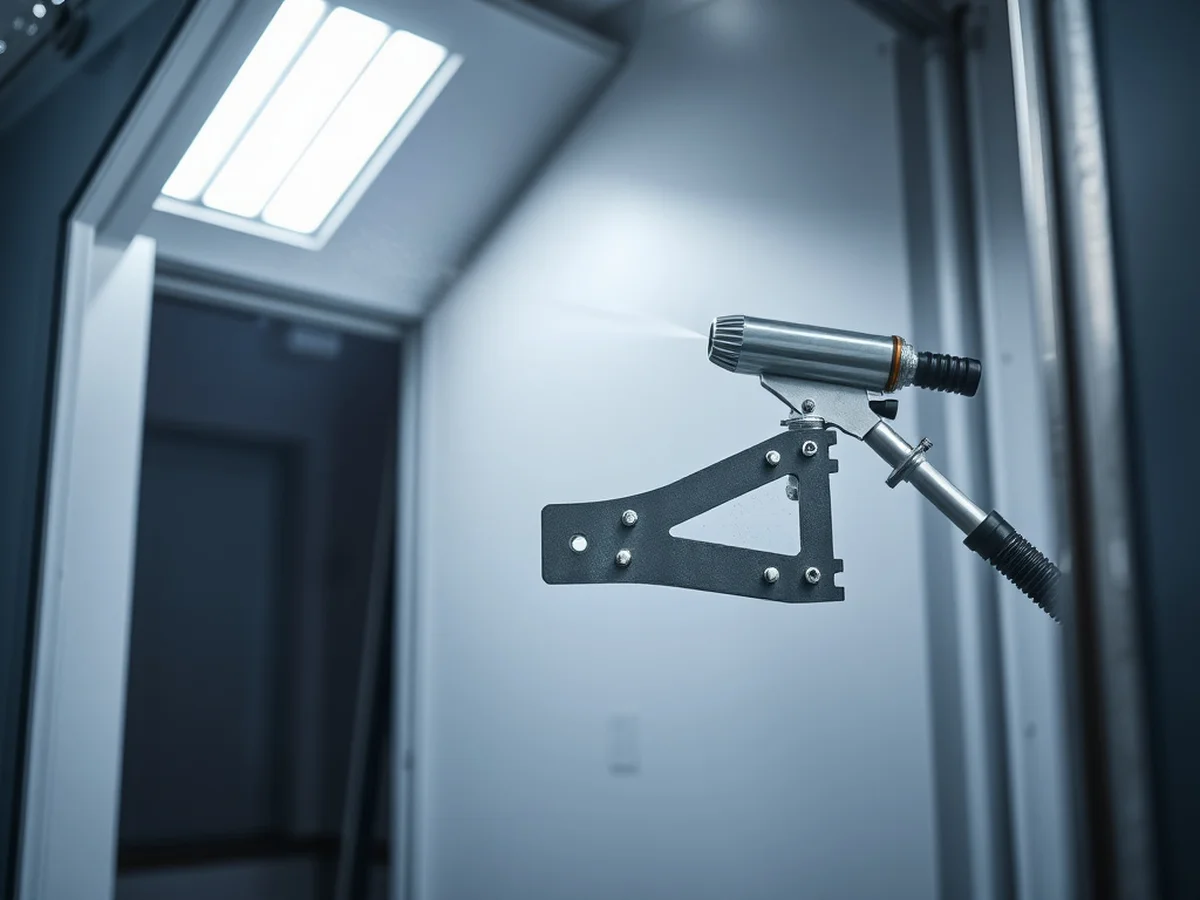
Finishing is the last stage a fabricated part typically passes through — surface preparation, corrosion protection, and appearance, applied after all cutting, forming, welding, and machining is finished. Powder coating is the most common finish for custom fabricated parts, chosen for its durability, wide color range, and corrosion resistance, though plating, anodizing, and other surface treatments apply depending on the material and application.
Finish quality depends heavily on what happens before the coating booth. Weld spatter, sharp edges, mill scale, and surface contamination all have to be addressed in surface prep, or they show through — or actively cause coating failure — in the finished part. A rushed or skipped prep step is one of the most common reasons a powder-coated part fails prematurely in the field.
This page covers how powder coating compares to plating and other finishes, what surface prep involves, and what to specify in your RFQ so the finish holds up in the environment your part will actually see.
What You Get
- Powder coating in a wide color range with strong corrosion resistance and durability for outdoor or industrial use
- Surface prep — deburring, weld spatter removal, and cleaning — performed as a defined step before coating, not skipped
- Alternative finishes (plating, anodizing) available where powder coat isn't the right fit for the material or application
- Applied as the final step after all cutting, forming, welding, and machining, on the finished part geometry
- Color and finish specification confirmed against a standard reference before production, not guessed at
Ideal For
- Parts destined for outdoor, industrial, or corrosive-exposure environments needing durable corrosion protection
- Assemblies where a specific brand or equipment color needs to be matched consistently across a run
- Aluminum parts where anodizing may be a better fit than powder coat for the application
- Any finished weldment or formed part where weld spatter and sharp edges need cleanup before coating
Powder Coating vs. Plating vs. Anodizing
Powder coating applies a dry powder electrostatically and cures it under heat into a durable, even finish — it's the most common choice for steel and aluminum parts needing color, corrosion resistance, and a consistent appearance across a run, and it holds up well in most outdoor and industrial environments. It's less commonly the right call for parts needing extremely tight dimensional tolerance after finishing, since coating thickness adds a small but real dimensional layer.
Plating (zinc, nickel, and other options depending on application) is generally chosen when the application calls for specific corrosion protection characteristics, electrical conductivity, or a thinner finish layer than powder coat provides — common on smaller precision components rather than large formed enclosures.
Anodizing applies specifically to aluminum, converting the surface into a durable oxide layer rather than adding a separate coating material — it's a common choice for aluminum parts needing corrosion resistance and color without the added dimensional buildup of powder coat, and is worth discussing directly if your part is aluminum.
- Powder coating: most common for steel and aluminum, strong corrosion resistance, wide color range
- Plating: often chosen for specific corrosion or conductivity needs, common on smaller precision parts
- Anodizing: aluminum-specific, converts the surface itself rather than adding a coating layer
- The right finish depends on material, dimensional tolerance sensitivity, and the part's operating environment
Why Surface Prep Determines Finish Quality
A powder-coated finish is only as good as the surface underneath it. Weld spatter left on a weldment, sharp burrs left from cutting or machining, or mill scale and contamination left on the raw material all interfere with coating adhesion, and can cause the finish to chip, peel, or fail prematurely in the field — well before the coating itself would otherwise have worn out.
Standard surface prep includes deburring cut and machined edges, removing weld spatter and smoothing weld beads where appearance matters, and a cleaning process appropriate to the material and any surface contamination present. This is treated as a defined production step, not an assumed pass-through between welding and the coating booth.
For parts with a cosmetically visible finish requirement — not just corrosion protection, but a specific appearance standard — surface prep gets more attention on visible faces than on faces that won't be seen in the final application, which is worth flagging in your RFQ so it's priced and planned for accurately.
- Weld spatter, burrs, and mill scale all interfere with coating adhesion if not addressed before finishing
- Deburring, weld cleanup, and material-appropriate cleaning are treated as a defined prep step
- Skipped or rushed prep is a leading cause of premature coating failure in the field
- Cosmetically visible parts warrant more prep attention on visible faces — flag this in your RFQ
Specifying Color, Coverage, and Environment
A powder coat color specification is confirmed against a standard reference (a RAL number, a manufacturer's color chip, or a defined equipalent) before production runs, rather than approximated from a description — this avoids a color mismatch on a multi-part order or a repeat order months later.
Coverage requirements — whether the whole part needs coating, or specific mating and threaded surfaces need to be masked and left uncoated — are called out on the drawing or RFQ, since masking those surfaces is a deliberate step, not an automatic assumption.
The part's operating environment matters for finish selection too: an outdoor structural part facing weather and UV exposure has different finish durability needs than an indoor enclosure, and we'll help you land on a finish spec appropriate to where the part actually lives, not just a default coating.
- Color specified against a standard reference (RAL number, color chip) to keep production and repeat orders consistent
- Coverage requirements — full coat vs. masked mating/threaded surfaces — called out explicitly on the RFQ
- Finish selection accounts for the part's actual operating environment, not a one-size default
- Powder coat thickness adds a small dimensional layer — flagged for any part with tight post-finish tolerance
What Affects the Price
Every RFQ is reviewed against your drawing before it's quoted. These are the factors that move the number most.
Surface prep requirements
Weld spatter removal, deburring, and cleaning add labor time proportional to part complexity and prior process history.
Finish type
Powder coating, plating, and anodizing carry different process costs depending on material and application requirements.
Coverage and masking
Parts requiring masked, uncoated mating or threaded surfaces add a masking step to the finishing process.
Color and quantity
Standard color runs are typically more cost-efficient than a custom-matched color on a small quantity, due to booth changeover time.
Common Questions
Powder coating is a common and generally durable choice for outdoor and industrial equipment, offering solid corrosion resistance and color retention in most environments. The specific durability depends on surface prep quality, coating thickness, and the exact environmental exposure the part will face — we'll help you spec a finish appropriate to where your part will actually operate.
Anodizing is aluminum-specific and converts the surface itself into a durable oxide layer rather than adding a separate coating, which some applications prefer for its thinner dimensional profile. Powder coating offers a wider color range and works across both aluminum and steel. We'll walk through the tradeoff based on your part's material, tolerance sensitivity, and appearance requirements.
Yes — color is confirmed against a standard reference like a RAL number or manufacturer color chip before production, which keeps the finish consistent across a full order and on any repeat orders down the line. Send us the reference you're matching to and we'll confirm it before coating.
Only if you want them to be — threaded and mating surfaces are commonly masked and left uncoated so they aren't affected by coating thickness, but this has to be specified on the drawing or RFQ rather than assumed. Tell us which surfaces need to stay bare and we'll mask them during finishing.
Premature coating failure most often traces back to surface prep — weld spatter, burrs, mill scale, or contamination left on the part before coating interferes with adhesion. We treat surface prep as a defined production step, not an assumed pass-through, specifically to avoid this failure mode.
Explore Related Capabilities
Need finishing & coating?
Send your drawing, material, and quantity, and we'll confirm the right process before anything is quoted.