CNC Machining
Milling and turning from solid stock (or a pre-cut blank) for parts that need true 3D geometry, threaded holes, or a tolerance tighter than cutting or forming alone can hold.
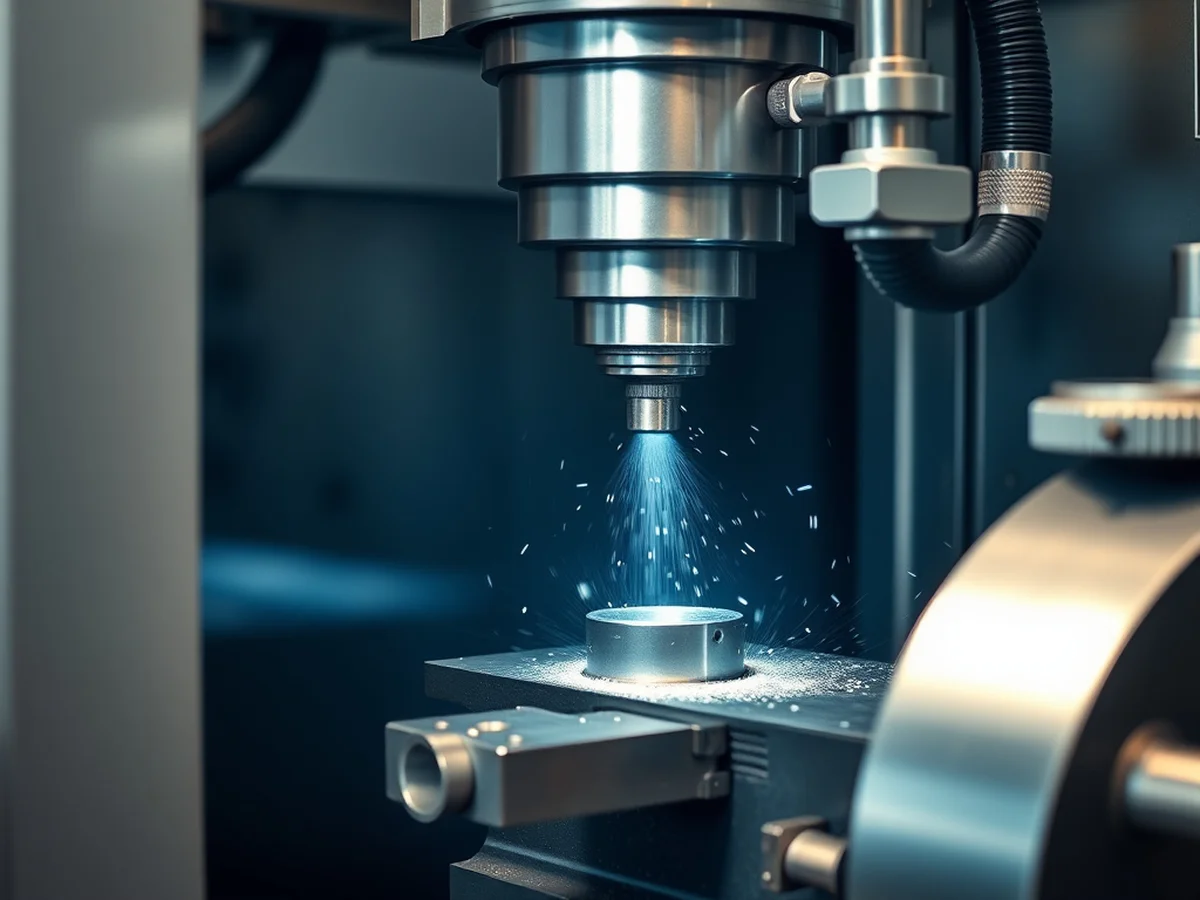
CNC machining removes material from solid stock — or from a laser-cut or formed blank — using a programmed multi-axis toolpath, producing features that other processes can't: precision bores, threaded holes, counterbores, and 3D geometry held to a tight, specific tolerance. It's the process to reach for when fit and function depend on a dimension that has to land within a few thousandths of an inch, not a general tolerance band.
Machining is also where a lot of custom fabricated parts pick up the features that make them functional rather than just structural — a shaft that needs to spin true, a mounting face that needs to sit flat against a mating part, a hole that needs a specific thread class rather than just a clearance hole cut on a laser.
This page covers what CNC machining adds to a fabricated part, how it typically combines with cutting and forming rather than replacing them, and what we need — a model or drawing with called-out critical tolerances, material, and quantity — to quote it accurately.
What You Get
- Holds tight, specific tolerances on critical features rather than a general cut or form tolerance
- Produces true 3D geometry, threaded holes, counterbores, and precision bores directly from a model
- Works on solid stock or on a blank that's already been laser-cut or formed, adding precision features to an existing part
- Scales from a single prototype machined part to a repeatable production run on the same program
- Available across steel, stainless, and aluminum, with the process adjusted for each material's machinability
Ideal For
- Parts with a mating face, bore, or shaft that needs to fit another component precisely
- Threaded holes, tapped features, or a thread class beyond what a drilled clearance hole provides
- Complex 3D geometry that can't be produced by cutting or forming a flat blank alone
- A specific tight-tolerance feature added to an otherwise laser-cut or formed part
Milling vs. Turning — Which Applies to Your Part
CNC milling removes material using a rotating cutting tool moved along a programmed path, and is the right fit for parts with flat faces, pockets, slots, and multi-axis features — brackets with machined mounting faces, housings with internal pockets, plates with precision hole patterns. CNC turning, by contrast, rotates the workpiece itself against a stationary or moving cutting tool, and is the natural fit for round, shaft-like, or cylindrical parts — spindles, bushings, and round standoffs.
Many custom parts use both in sequence, or use milling on a part that started as a turned blank. Knowing which geometry your part actually needs — flat-and-pocketed versus round-and-cylindrical — is one of the fastest ways to get an accurate first-pass quote, and it's something we'll help confirm from your drawing if it isn't obvious.
Neither process requires hard tooling the way stamping does, which is part of why CNC machining works for both a single prototype part and a production run — the program changes, not a physical die.
- Milling: flat faces, pockets, slots, and multi-axis features — most bracket and housing work
- Turning: round, shaft-like, and cylindrical parts — spindles, bushings, standoffs
- Many parts combine both, or use one process on a blank produced by another
- No hard tooling required, so the same setup scales from prototype to production run
Machinability by Material
Aluminum machines fast and holds tight tolerances comparatively easily, which is a big part of why it's a common choice when a part needs precision features and weight matters. Carbon steel machines well but generally runs slower per cut and with more tool wear than aluminum, especially on harder grades. Stainless steel is the most demanding of the three to machine cleanly — it work-hardens under the cutting tool if feeds and speeds aren't managed correctly, which is a machining consideration, not a reason to avoid stainless when corrosion resistance is what the part actually needs.
These differences show up in both cost and lead time. A stainless part with the same geometry as a carbon steel part will typically take longer to machine and cost more per part, independent of the raw material price difference — worth knowing up front when a buyer is deciding between materials on borderline applications.
If your part's material choice is driven by an environmental or corrosion concern rather than pure cost, our team will help you weigh whether stainless is worth the added machining cost versus a coated carbon steel alternative — see our materials guide for the fuller comparison.
- Aluminum: fastest and typically most cost-efficient to machine to tight tolerance
- Carbon steel: solid machinability, generally slower and more tool wear than aluminum
- Stainless steel: most demanding to machine cleanly, but often necessary for corrosion resistance
- Material choice affects machining cost independent of raw material price — factored into every quote
What to Include in a CNC Machining RFQ
The single biggest factor in getting an accurate CNC quote fast is a clear model or drawing with critical tolerances actually called out — not every dimension marked tight, but the specific features where fit or function genuinely depends on precision. A 3D model (STEP file is ideal) paired with a 2D drawing showing GD&T or tolerance callouts on critical features gives us everything needed for a first-pass quote.
Surface finish requirements matter here too, if your part has one — a machined mating face may need a specific surface finish callout, while a non-critical surface doesn't need the same spec. Flagging which surfaces actually matter keeps the quote accurate and avoids paying for finish quality the part doesn't need.
As with any custom part, quantity changes the picture substantially — a single prototype machined part is priced differently than a production run of the same geometry, since setup time is amortized differently across volume.
- STEP file or equivalent 3D model, plus a 2D drawing with critical tolerances and GD&T called out
- Flag which specific features need tight tolerance — not every dimension needs to be critical
- Note any surface finish requirements on specific faces, if applicable
- Prototype vs. production quantity, since setup cost amortizes differently across volume
What Affects the Price
Every RFQ is reviewed against your drawing before it's quoted. These are the factors that move the number most.
Material and machinability
Aluminum, carbon steel, and stainless machine at different speeds and with different tool wear, which shows up directly in per-part cost.
Tolerance and feature complexity
Tight-tolerance features, multi-axis geometry, and threaded holes all add machine time compared to a simpler part with looser general tolerances.
Setup and quantity
A one-off prototype carries the full setup cost in a single part; a production run spreads that setup across many parts, lowering per-part price.
Finish and secondary operations
Specified surface finish, deburring, or a finishing/coating step after machining adds to the quoted price and lead time.
Common Questions
CNC machining can hold significantly tighter tolerances than cutting or forming alone, on the specific features that need it. The exact achievable tolerance depends on material, feature geometry, and part size, so we confirm the specific number for your part during quoting rather than quoting a single number that applies to every job.
Yes — adding machined features to an existing laser-cut or formed blank is common, especially when the part needs a precision bore, threaded hole, or mating face that the earlier process wasn't designed to hold. Send us the existing part or its drawing along with what features need to be added.
Yes, along with carbon steel — all three are common CNC machining materials for fabricated parts. Stainless is the most demanding to machine cleanly and typically costs more per part than the same geometry in aluminum or carbon steel, which we'll reflect accurately in your quote rather than underquoting and revising later.
A STEP file (or equivalent 3D model) is ideal, paired with a 2D drawing showing critical tolerances and any GD&T callouts. If you only have a 2D drawing, that can work too, but a 3D model speeds up quoting and reduces the chance of a misread dimension.
Often yes — CNC machining doesn't require hard tooling, so a single prototype part is achievable without the die investment that other processes might need. The tradeoff is that per-part cost for a one-off is higher than a production run of the same part, since setup time is carried by that single unit rather than spread across volume.
Explore Related Capabilities
Need cnc machining?
Send your drawing, material, and quantity, and we'll confirm the right process before anything is quoted.