Steel, Aluminum & Stainless — Compared for Fabrication
Material choice affects structural performance, corrosion resistance, weight, and what the whole fabrication sequence costs — not just the raw material price. Here's a practical breakdown of the three materials we source most for custom parts.
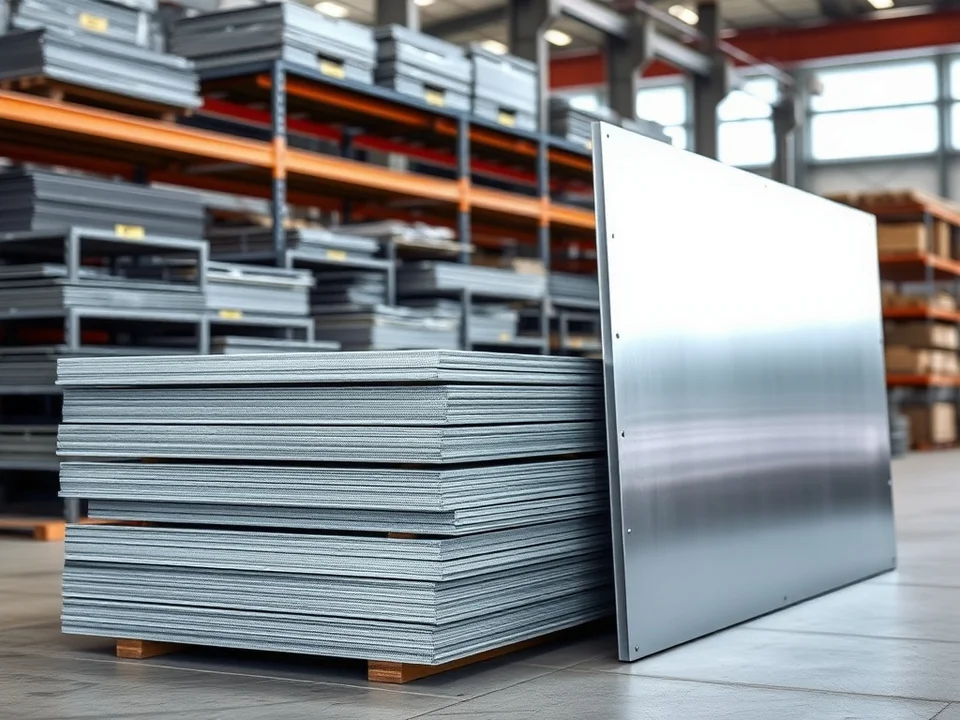
Carbon Steel
The default structural choice for most fabricated parts
Carbon steel is generally the most cost-efficient structural material for fabricated parts, with strong mechanical properties across a wide range of grades and thicknesses. It cuts, forms, and welds predictably, which keeps fabrication cost lower relative to stainless for comparable geometry.
Bare carbon steel is susceptible to rust when exposed to moisture, so parts destined for outdoor exposure, washdown environments, or high humidity typically need a protective finish — powder coating is the most common — to hold up over time.
Good For
- Structural brackets, frames, and weldments where cost efficiency matters most
- Parts that will be finished or coated for corrosion protection
- Applications without a hard corrosion-resistance or weight requirement
Considerations
- Requires a protective finish for outdoor or high-moisture environments
- Heavier than aluminum for comparable structural strength
Stainless Steel
Corrosion resistance and cleanability without a separate coating
Stainless steel's alloy composition gives it strong corrosion resistance and a clean, consistent appearance that holds up over time without a separate coating — which is why it's common in food-adjacent, medical-adjacent, marine, and outdoor applications where corrosion resistance is a genuine requirement.
That performance comes at a cost premium over carbon steel in both raw material and fabrication. Stainless is more demanding to machine and weld cleanly than carbon steel, and generally costs more per part for comparable geometry.
Good For
- Outdoor, washdown, marine, or corrosive-exposure applications
- Food-adjacent, medical-adjacent, or cleanability-driven applications
- Parts where a consistent, uncoated appearance is part of the spec
Considerations
- Higher material and fabrication cost than carbon steel for comparable parts
- More demanding to machine cleanly — can work-harden if feeds/speeds aren't managed correctly
Aluminum
Significant weight savings with fast, precise machining
Aluminum's defining advantage is weight — significantly lighter than steel for a comparable structural application, which matters for parts that get shipped, mounted on moving equipment, or handled manually. It machines fast and holds tight tolerances comparatively easily, and forms a natural oxide layer giving it reasonable corrosion resistance without a coating.
The tradeoff is strength-to-thickness relative to steel — matching a steel part's load capacity in aluminum often means added material thickness or a different structural design, not a direct swap. Aluminum also generally costs more per pound than carbon steel, though weight savings can offset that where shipping or handling weight matters.
Good For
- Parts where total weight is a real cost or handling factor
- Precision-machined features requiring fast turnaround
- Applications wanting corrosion resistance without a coating (anodizing available)
Considerations
- Lower strength-to-thickness than steel — may require design adjustment for equivalent load
- Generally higher raw material cost per pound than carbon steel
Read the full material selection guide
A deeper walkthrough of how to weigh strength, weight, corrosion exposure, and fabrication cost against your specific application.
Common Material Questions
Not necessarily. A well-finished, powder-coated carbon steel part can perform well in many outdoor applications at a lower total cost. Stainless makes the most sense when corrosion resistance is a hard requirement — marine, washdown, or highly corrosive environments — rather than a general precaution.
Welding dissimilar metals directly together (steel to aluminum, for example) generally isn't straightforward without a specific transition method. Mixed-material assemblies are more commonly joined with fasteners rather than welded directly — tell us your intended assembly and we'll advise on the right approach.
Significantly. Stainless generally costs more to laser cut, form, and weld than carbon steel for the same geometry, independent of raw material price. Aluminum machines faster than steel but has its own welding considerations. Material choice affects the whole production sequence, not just the material invoice line.
Material certifications and mill test reports can be provided when specified on your RFQ — this is increasingly standard for industrial and OEM buyers. Tell us your documentation requirements up front so they're built into sourcing from the start.
Not sure which material fits your part?
Tell us your application, environment, and budget, and we'll walk through the tradeoffs before you commit to a spec.